On my first day as a Management Consultant at PwC, my manager told me:
“It’s all about structure, structure, structure.”
At the time, that made perfect sense. Everything in consulting lived inside a framework. Strategy had logic. Numbers had logic. Decisions had logic.
When I moved into HR, that certainty faded.
The People space felt fragmented. On one side, empathy, facilitation, DE&I, leadership development: the “art”. On the other, compliance, retention data, workforce planning: the “science”. It often felt binary, and I struggled to see how it all fit together in one coherent system. More importantly, I struggled to see how to speak about it credibly in front of a board.
Becoming CIPD-qualified gave me something I hadn’t realised I needed: structure. It provided an underlying architecture of the People function, the classic domains of organisational development, talent, reward, employee relations, compliance and so on. It grounded me in employment law, governance, and professional standards. It helped me understand the mechanics.
That foundation mattered. It gave me language. It gave me discipline. It gave me legitimacy.
But structure alone did not transform the impact of the function.
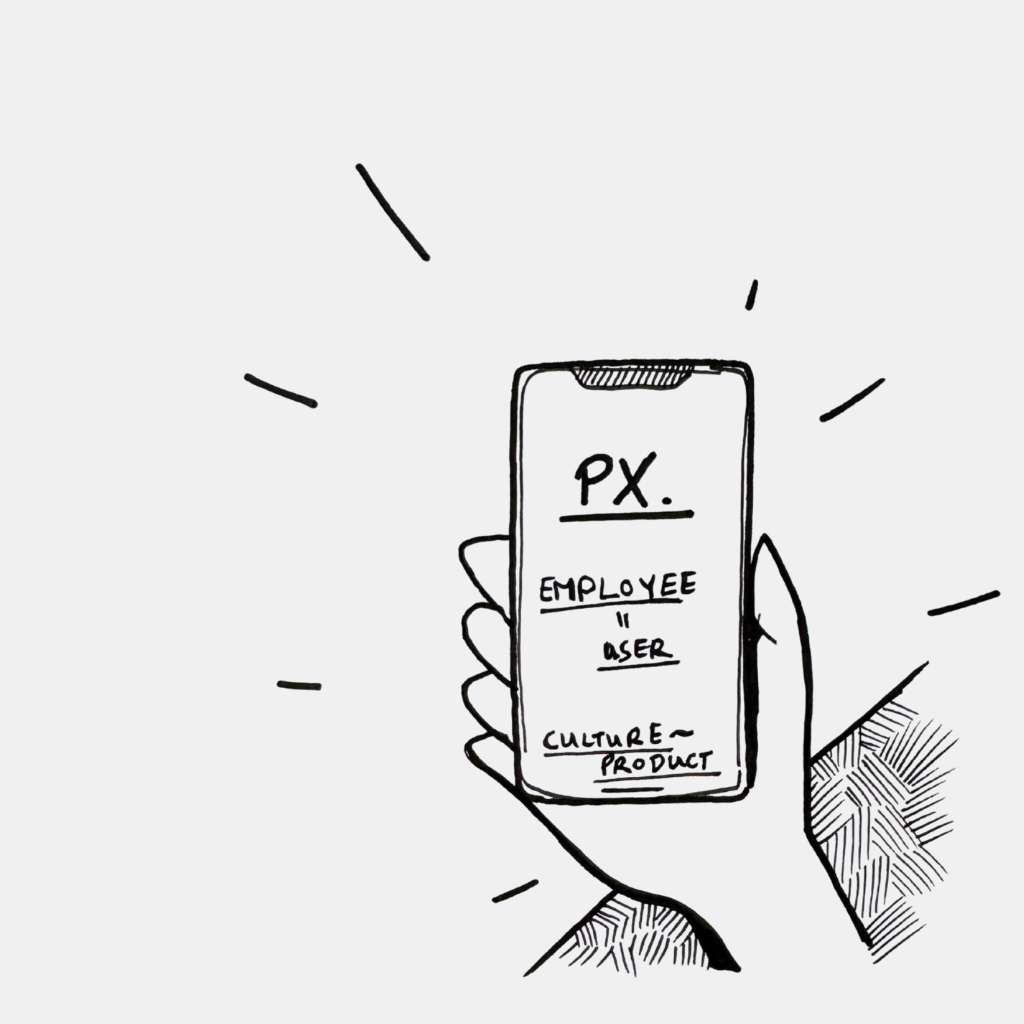
What changed a lot was adopting a PX mindset.
Writers and operators like Jessica Zwaan in Built for People** and practitioners like Luke O’Mahoney articulate this clearly: if we want People teams to drive real business impact, we need to think like product teams.
Employees are not just stakeholders. They are users.
Culture is not an abstract value statement. It is the product experience.
That shift reframed everything for me.
Instead of asking, “What initiatives should HR run this year?” I began asking, “What problem are we solving for our users?” Instead of reporting activity, we measured outcomes. Instead of launching programmes and hoping for the best, we iterated.
My CIPD grounding gave me the structural map of the People function. The PX mindset gave me the operating system.
It allowed me to connect traditional People domains to measurable business objectives. Engagement was no longer a vague aspiration; it became a health metric. Retention wasn’t just a percentage; it became a signal of product-market fit between employee expectations and our culture. Learning and development wasn’t a calendar of workshops; it was a lever for internal mobility and performance density.
The product mindset also introduced something else: transparency.
Through voices like Adam Horn and John Faulkner-Willcocks, the OpenOrg philosophy, I saw how People systems could be designed in the open with clear salary frameworks, visible career paths, documented operating principles. Transparency stopped being a risk and started becoming a feature. It built trust internally and credibility externally. If we treat culture as a product, then clarity about how it works should not be hidden.
Over time, I realised that the perceived tension between “art” and “science” in HR dissolves when you apply structure and product thinking together. Empathy informs the design. Data validates the impact. Structure holds it all in place.
The traditional CIPD framework gave me depth and professional rigour. The PX mindset enabled me to make a difference.
It allowed me to speak to the board not just about wellbeing or compliance, but about performance, retention economics, innovation capacity and risk mitigation all through the lens of the employee experience.
The People space is dynamic by nature. Expectations shift. Labour markets evolve. Culture is never finished. But with a consistent structural foundation and a product development mindset layered on top, the function becomes both agile and credible.
Structure gives you the spine.
Product thinking gives you movement.
Transparency gives you trust.
And that is how I have learned to measure and build success in People & Culture.
So How Do We Actually Measure Success?
Structure and mindset are important. But measurement is where credibility is earned.
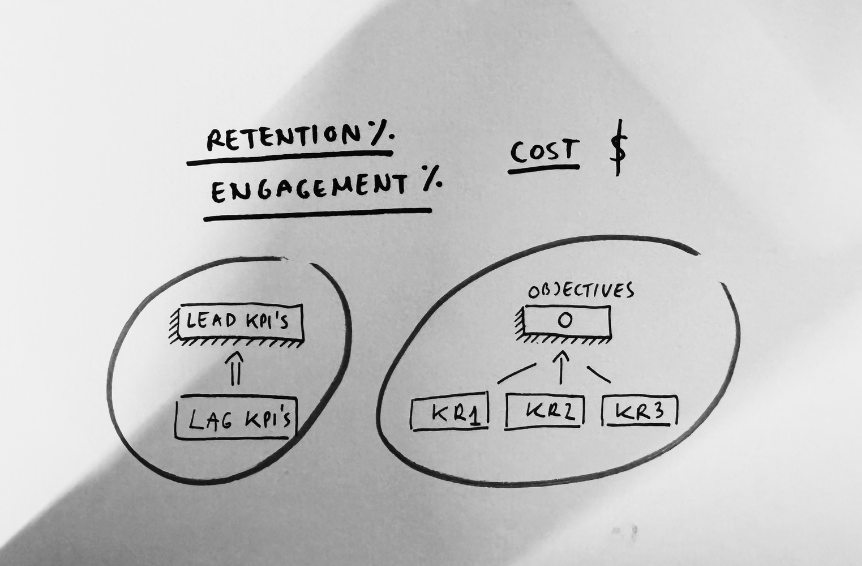
In the People space, we often default to reporting metrics such as retention, engagement scores, time-to-hire, or absence rates. These are important, but on their own, they are lagging indicators. They tell us what happened, not why it happened.
If engagement drops or regretted attrition rises, the real work begins with asking:
Why?
And then why again.
And then why again.
Surface-level metrics do not create impact. Understanding root causes does.
This is where OKRs became transformative for me as a People leader.
OKRs force clarity. They require you to define:
-
What outcome are we trying to achieve?
-
Why does it matter for the business?
-
How will we know if we are succeeding?
They create a bridge between People initiatives and company strategy.
For example, instead of saying:
“Improve engagement.”
An OKR approach reframes it as:
Objective: Increase performance sustainability in core teams.
Key Results:
– Reduce regretted attrition from 12% to 7%
– Increase internal mobility ratio from 18% to 30%
– Improve engagement driver ‘growth opportunities’ from 3.6 to 4.2
Now retention and engagement are not abstract HR goals. They are levers tied to strategic outcomes.
OKRs also allow you to combine leading and lagging indicators. Retention is lagging. Engagement drivers, promotion velocity, manager effectiveness scores those are leading. Together, they create a coherent performance narrative.
Most importantly, OKRs institutionalise the “why”. They force People teams to deeply understand the problem before launching initiatives. If we cannot articulate the root cause, we should not ship the solution.
That discipline builds credibility.
When the People function adopts the same goal-setting system as Product, Finance or Operations, something shifts. Conversations change. The function stops being perceived as reactive or programmatic and starts being seen as strategic and outcome-driven.
That alignment creates robust relationships across functions. It establishes a shared language. It positions the People leader not as a support role, but as a strategic partner.
Integrating Consulting, CIPD, PX and OKRs
Looking back, my background in management consulting was not separate from my People career, it became the integrator.
Consulting trained me to think in systems, to structure ambiguity, to connect initiatives to enterprise value. CIPD gave me professional depth and understanding of the People domains. PX thinking gave me the user-centric, product-led mindset. And OKRs provided the execution discipline that connected everything to business strategy.
Together, they formed a coherent operating model:
CIPD gave me the foundation.
PX gave me the lens.
OKRs gave me the mechanism.
Consulting gave me the structuring muscle to bring it all together.
That combination is what allowed me to move from running HR initiatives to building a measurable People product.
And ultimately, that is how success in the People space should be measured, not by activity, but by strategic impact grounded in a deep understanding of why problems exist in the first place.