Identifying your organisation’s core values and embedding them to every single people practice + recognise the individual responsibility!
Don’t Abstract the Culture
We are a “people organization.”
I am a “people person.”
“Culture eats strategy for breakfast.”
Beautiful phrases. But what do we really mean?
Culture often floats around as something noble and inspirational – and intangible.
But culture is not a feeling.
Culture is a system.
And if we don’t design it deliberately, it designs itself.
As Brian Chesky wrote in Don’t Fuck Up the Culture, culture is not something you preserve later. It is something you architect from day one. Airbnb didn’t just write values – they embedded them into hiring, decision-making, and even rejection criteria.
That’s the uncomfortable part.
Culture is not what you say.
It’s what you operationalize.
Am I Personally Responsible for Culture? YES.
As VP of People, I do not “own” culture.
What I am most responsible for is to make everyone feel that they are responsible themselves. As People Leader I am doing my best protecting it, shaping it, and translating it into systems – but at the end, culture can only sustain when individual responsibility matters.
Culture does not live in a slide deck.
It does not live in the People function.
It lives in decisions.
It lives in:
-
Who we hire
-
Who we promote
-
What behavior we tolerate
-
What we reward
-
What we confront “culture really shines when sh*t hits the fan”
If values are not visible in those moments, they are decorative.
And decoration does not scale.
Embedding Values From the Beginning
At InPlanet, we made a very intentional choice from the very beginning:
We embedded transparency into the organization as a foundational value.
Not as a buzzword.
As a practice.
Whenever a new People practice was created – performance management, compensation philosophy, feedback rituals, growth frameworks – we worked closely with the founders to build it alongside our values.
Not after.
Not as a communication layer on top.
But as a design principle.
If transparency was a value, then:
-
How transparent are we about company performance?
-
How transparent are we about decision-making?
-
How transparent are we about expectations and feedback?
Values that cannot survive operationalization are not values. They are aspirations.
Over time, as we matured, we discovered something interesting.
While many things matter, most people consistently care about three core elements:
Trust. Drive. Impact.
-
Trust: Can I rely on leadership and my teammates? Is information shared openly?
-
Drive: Are we ambitious? Are we moving with intention?
-
Impact: Does my work matter? Can I see the difference I’m making?
Those became cultural anchors. Not because we declared them — but because behavior kept pointing back to them.
Role Modeling Is Simple – And Extremely Hard
An experienced consultant once told me:
“All you need to do is ensure that you and the senior leaders role-model your values and hold each other accountable.”
He was right.
And it is far harder than it sounds.
Because role modeling means:
-
Calling out misalignment even when performance is high.
-
Slowing down hiring when scale pressures are intense.
-
Choosing long-term trust over short-term output.
-
Saying no to brilliant jerks.
Chesky famously emphasized hiring for cultural alignment as rigorously as for competence. That discipline becomes even more critical when growth accelerates.
But culture cannot stop at leadership.
The real question is:
What makes every individual feel they contribute to culture?
Culture Is Individual Responsibility
Culture dilutes the moment people think:
“That’s HR’s job.”
“That’s leadership’s job.”
“That’s someone else’s job.”
My role as a People Leader is to make everyone aware of their responsibility toward culture.
Culture thrives when people believe they shape it.
When unique individuals recognize that their behavior, decisions, and energy influence the environment, culture creates a domino effect.
As Viktor Frankl argued, freedom without responsibility is empty.
The same is true at work.
When people own the culture, they are not controlled by it — they shape it.
Structuring Culture So It Doesn’t Become Overwhelming
One mistake HR teams at startups make is treating culture as one giant emotional concept.
It becomes abstract. Unmeasurable. Overwhelming.
That is why I believe in segmentation in the backend when we create people practices.
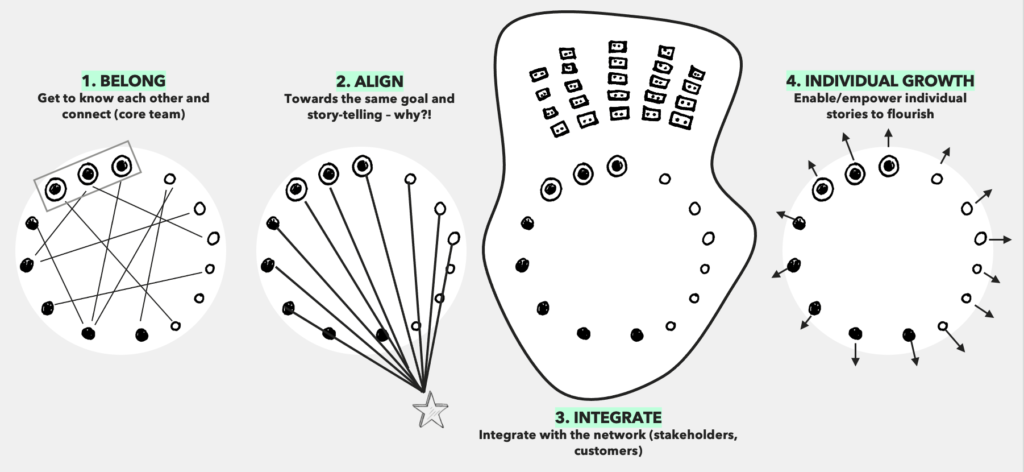
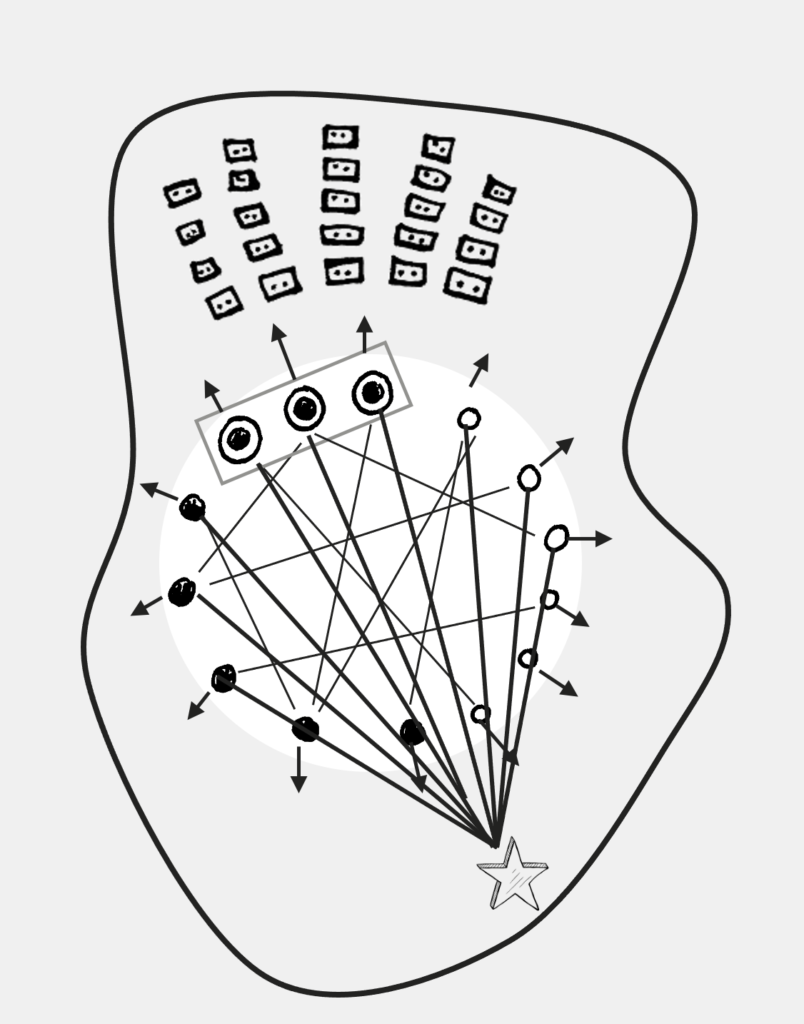
For us, culture can be understood across four dimensions:
-
Belong – Do I feel connected?
-
Align – Do I understand and commit to the same star?
-
Integrate – Do I collaborate effectively with the wider system?
-
Individual Growth – Can I grow without losing myself?
When separated, these dimensions are clear, discussable, and measurable.
When stacked into one emotional blob, they become noise.
Structure creates clarity.
Clarity creates accountability.
Measuring Culture – The Honest Signal ‘the lead KPI’
Engagement surveys matter.
Sentiment data matters.
But one of the clearest signals of culture is voluntary resignation.
When someone leaves by choice, they are voting with their time and energy.
Recruitment is an exchange:
-
We offer mission, culture, opportunity.
-
They invest time, talent, trust.
If people remain, grow, and continue to commit, it suggests alignment between promise and experience.
I’m proud to say that throughout 2025 at InPlanet, we have had 0% voluntary resignation.
That is not just a retention statistic.
To me, it suggests:
-
Transparency is not theoretical.
-
Trust is experienced.
-
Drive is shared.
-
Impact is visible.
But retention alone is not success.
The real test as Chesky warns is scale.
Culture is easiest when small.
The challenge is protecting it as complexity increases.
Final Thought
Culture is not:
-
Words on walls.
-
Slides in onboarding.
-
A People initiative.
Culture is the sum of daily decisions multiplied by time.
It is built through role modeling.
Protected through accountability.
Structured through clarity.
Embedded through systems.
And owned by everyone.
Let’s raise a glass to the culture cocktail.
But let’s remember:
If we don’t intentionally mix it, it separates.