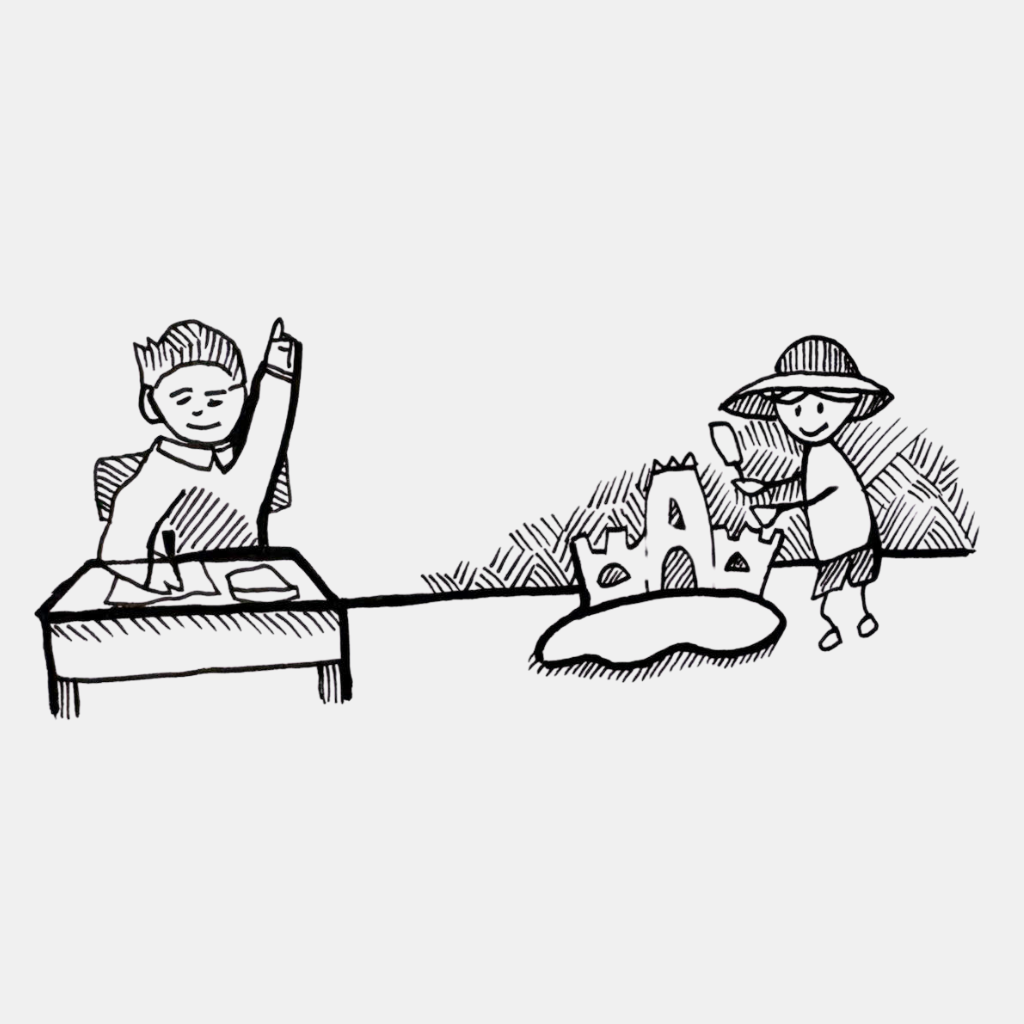
Startups are young.
Not just young in age – young in psychology.
They are evolving organisms. Still forming identity. Still testing boundaries. Still seeking validation, support and funding from “parental” figures, investors, advisors, early customers. They rely heavily on external belief while building internal capability.
In many ways, a startup resembles a child.
Less self-awareness.
Less clarity of identity.
High dependency.
High experimentation.
And like children, startups learn through play.
What I Learned About Play
On my first day at the University of Oxford, where I was studying Psychodynamic Psychotherapy, something unexpected happened.
We were given no instructions.
Instead, we walked into a room filled with thousands of toys. Adults. Many of us over 30 or 40 years old. No structure. No guidance. Just a floor covered in objects inviting interaction.
The professors did not say a word.
We played.
Awkwardly at first. Then freely. Silly. Creative. Curious. Boundary-testing.
In the following weeks, we unpacked the experience and read extensively about play. particularly the work of Donald Winnicott, who described play as the space where creativity and the self emerge. For Winnicott, play is not childish distraction; it is the foundation of psychological development. It is how we experiment with identity, risk, imagination and relationship.
Play is where innovation is born.
And here is the important part:
Play does not exist without boundaries.
A playground has edges. It is supervised. It is held.
Within that holding environment, creativity flourishes.
Startups as Playgrounds
A startup is, at its best, a playground.
There are constraints, capital, time, market pressure. There are expectations. product-market fit, growth, performance. But inside those boundaries, teams must experiment constantly.
Prototypes. Messaging. Positioning. Pricing. Culture. Hiring.
Everything is iteration.
Startups deal daily with uncertainty and the unknown. And if there is no sense of play, curiosity and even fun, that uncertainty becomes exhausting rather than energising.
We often speak about innovation as a strategy.
But psychologically, innovation requires play.
The Other Force: Discipline
And yet, play alone is chaos.
A startup without discipline burns cash. Misses deadlines. Over-indexes on ideas without execution.
Discipline provides:
Focus
Performance standards
Clarity of goals
Accountability
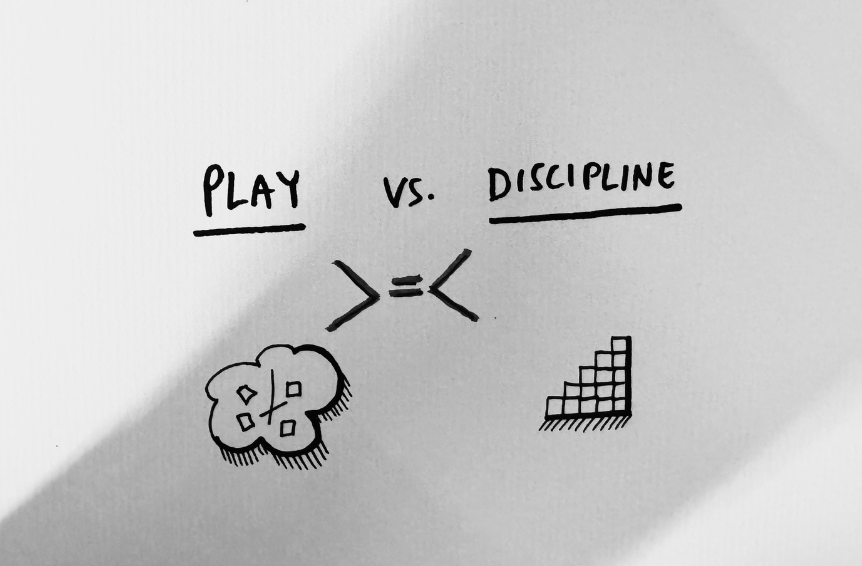
If play is exploration, discipline is direction.
If play expands possibilities, discipline selects and executes.
A good culture, in my experience, intentionally holds both:
Performance ~ Discipline
People ~ Play
And they are not opposites.
They empower each other.
Why They Belong Together
There is a misconception that discipline kills creativity.
In reality, the right kind of structure enables it.
Winnicott spoke about the “holding environment” – the psychological container that makes exploration safe. In organisational life, discipline is part of that container. Clear expectations, transparent feedback, defined performance frameworks – these do not suppress creativity. They make it sustainable.
A funny idea, a playful innovation, can be delivered with excellence and rigour. In fact, the highest-performing teams are often the ones who take their craft seriously while not taking themselves too seriously.
Think of the best product teams you know.
They prototype playfully.
They debate openly.
They laugh.
And then they execute with precision.
Designing for Discipline and Play as a People Leader
As a People Leader, it is essential to design systems that consciously hold both forces.
Performance frameworks are a perfect example.
We all need them. Clear standards. Transparent expectations. Honest feedback loops. Direct conversations about impact.
But how we design them matters.
I have always tried to make performance systems visually engaging, slightly gamified, colourful, leaving space for creativity in how goals are achieved, while remaining disciplined about what outcomes are expected.
Structure does not have to be sterile.
Play does not have to be unserious.
The goal is not to choose one over the other, but to integrate them.
An Invitation to Founders
To founders, I would say this:
Recognise both forces in your organisation.
Create space for play, for experimentation, humour, curiosity and creative risk.
And pair it with disciplined execution, clear OKRs, honest performance standards, defined ownership.
Your startup is not just a business. It is a developing organism.
Like a child, it needs boundaries and freedom.
It needs structure and imagination.
It needs discipline and play.
When both are present, innovation is not forced.
It emerges.
And perhaps most importantly, the journey becomes something you can actually enjoy.