When I work with early-career team leaders and line managers, one theme comes up again and again:
They are anxious about 1:1 conversations.
Not because they don’t care.
But because they care deeply.
They worry about:
“Opening something I can’t close.”
“Crossing a boundary.”
“Becoming someone’s therapist.”
“Mixing personal and professional topics.”
So they default to what feels safer:
Tasks. Metrics. Updates. Performance.
I understand where this comes from. I have been there myself.
But here’s the truth:
As leaders, we mentor.
We coach.
And at times, we counsel.
And all three are built on the same foundation:
Listening.
What differentiates leaders is not whether they separate these roles perfectly.
It’s whether they have the confidence to dance in conversation.
That has also been my personal story.
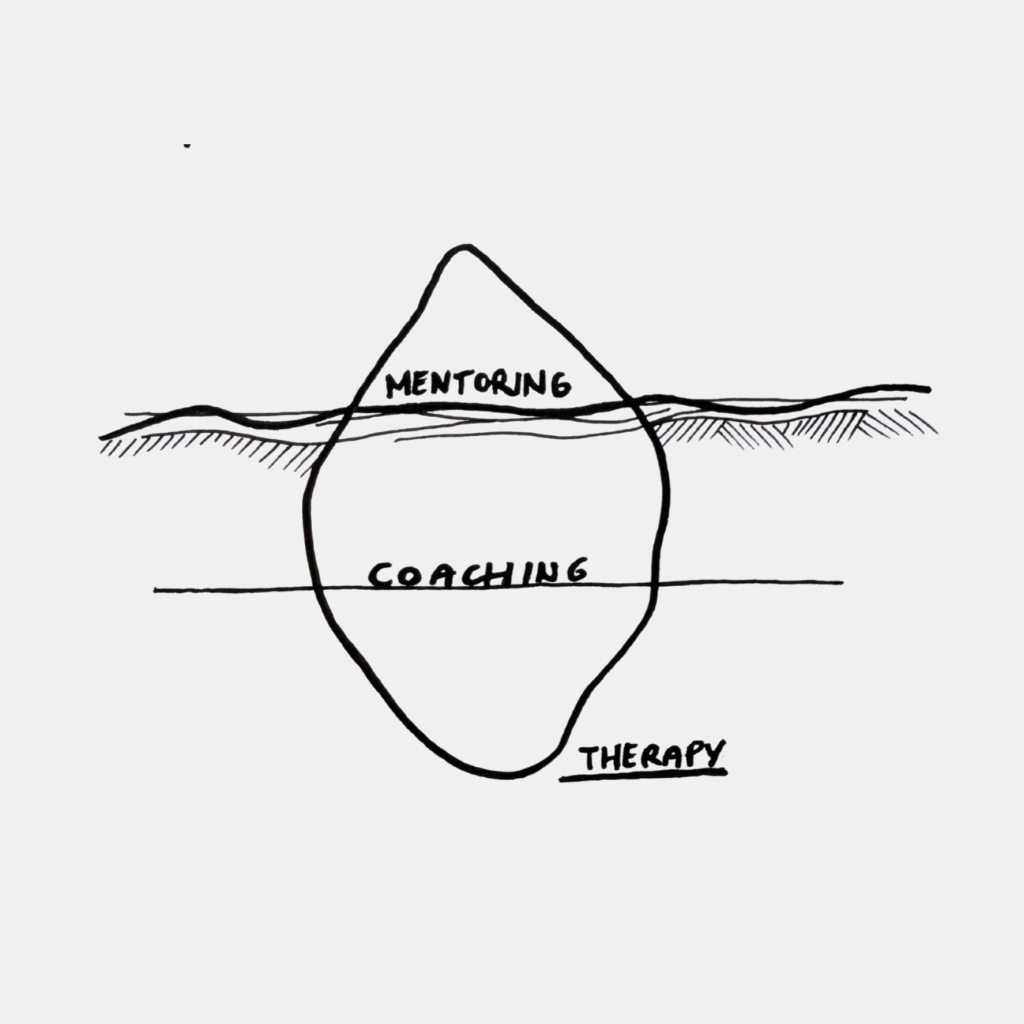
Mentoring, Coaching, Counselling — What’s the Difference?
From my experience as a VP of People, and with training in HR, coaching and psychodynamic psychotherapy, I see them like this:
Mentoring
When I know more about something practical or technical and I guide you.
It is directional. Often skill-based. Experience-sharing.
Coaching
We go a level deeper.
We explore behavioural patterns, assumptions, blind spots.
I provoke reflection rather than give answers.
Counselling (therapy-informed leadership)
This connects to deeper tissue.
Emotion, identity, history, meaning.
It requires more holding and containing. Less fixing.
The level of depth shifts.
But the core mechanism remains the same:
Listening.
There Is Literature That Integrates This
This integration is not accidental.
In the field of Personal Consultancy, scholars such as Nash Popovic have explicitly explored how coaching and psychotherapy can be integrated within one-to-one developmental conversations.
Personal Consultancy proposes that we do not need to artificially split:
performance and psychology,
doing and being,
structure and spontaneity.
Instead, it suggests an integrated approach built around four movements:
Authentic Listening
Rebalancing
Generating
Supporting
Look at those carefully.
Authentic listening sits at the centre.
From there:
Rebalancing helps someone regulate and gain perspective.
Generating opens agency, possibility, forward motion.
Supporting sustains growth and containment.
Whether you call it mentoring, coaching or counselling, those four movements are present.
The technique may differ.
The relational stance does not.
The Boundary Anxiety
Boundaries are essential.
They protect both people.
They protect organisations.
They protect ethical practice.
But here is where many leaders lose their confidence:
When the focus shifts from listening
to constantly policing the boundary.
When leaders become hyper-aware of:
“Is this too personal?”
“Am I allowed to ask this?”
“Is this coaching or therapy?”
They stop being present.
They stop dancing.
Over-focusing on separation can disable the very thing that makes leadership powerful, the ability to stay with another human being.
The anxiety about boundaries often hides a deeper fear:
Fear of not being in control of the outcome.
Listening Is the Core
Whether we call it mentoring, coaching or counselling, the foundation is the same:
A conversation between two human beings.
What happens in that space is like an iceberg.
Above the surface:
Tasks.
Deliverables.
KPIs.
Feedback.
Below the surface:
Fear of failure.
Shame.
Ambition.
Identity.
Family history.
Belonging.
If a leader only listens to the visible tip, they manage tasks.
If they learn to listen beneath the surface, they lead people.
Listening is not passive.
It is an active, relational skill.
It requires emotional regulation.
It requires the ability to tolerate ambiguity.
It requires confidence.
And that confidence is what allows you to dance.
The Dancing Metaphor
I wrote my final essay at the University of Oxford on the metaphor of dancing – Dancing in the Moonlight – exploring my relationship with responsibility, freedom and listening.
What I discovered is this:
When you dance with someone, you do not know the next step.
You do not always know who initiates.
You cannot fully control the outcome.
Sometimes you lead.
Sometimes you follow.
Sometimes you misstep and recover.
It becomes a shared experience.
Leadership conversations are the same.
In a 1:1, you are dancing:
You sense when to ask.
You feel when to challenge.
You notice when to pause.
You accept that you might step on a toe.
The confident leader is not the one who has the perfect script.
It is the one who trusts they can take a step, and stay present, even if the music changes.
Mentoring, coaching and counselling all contain this dance.
The techniques differ.
The listening is shared.
So What Is the Advice?
Be mindful of boundaries.
Yes.
But do not let fear of crossing them prevent you from listening deeply.
Trust your intention.
If you are a line manager sitting in a 1:1 thinking:
“I genuinely want to help. I want to bring value. I want this person to grow.”
That intention matters.
You are not becoming someone’s therapist.
You are not responsible for fixing their entire life.
You are responsible for your step.
And your step is listening.
If you focus on that, on staying present, curious and grounded,
you will naturally know when to mentor, when to coach, and when something requires external support.
Leadership is not about perfectly separating roles.
It is about having the courage to dance.